The best first guesses for Word Grid
Every Word Grid answer is a one-word country name, and there are only 156 of them. I counted the letters in all of them, and the best first guess depends on the length.
First, what can even be an answer?
The hidden word in Word Grid is always a country whose name is a single word of four to ten letters, written without accents. So anything with a space is out (South Africa, New Zealand, the United States), and so are long ones like Switzerland. Türkiye is spelt TURKIYE. That leaves 156 possible answers, and the number of tiles in a row tells you the length straight away. Honestly that's the biggest clue you get all game, so use it:
| Letters | Answers | Examples |
|---|---|---|
| 4 | 10 | Chad, Cuba, Fiji, Iran, Iraq, Laos, Mali, Oman, Peru, Togo (that's all of them) |
| 5 | 25 | Chile, China, Egypt, India, Japan, Kenya, Spain |
| 6 | 31 | Brazil, Canada, France, Mexico, Norway, Poland |
| 7 | 43 | Albania, Germany, Ireland, Morocco, Vietnam |
| 8 | 24 | Bulgaria, Colombia, Portugal, Thailand |
| 9 | 10 | Argentina, Australia, Indonesia, Singapore |
| 10 | 13 | Bangladesh, Kazakhstan, Luxembourg, Madagascar |
Seven letters is the most common length by a distance (43 of the 156, so a bit more than one day in four). Four letters is the one I'd want every day, because there are only ten of them.
Guesses come from the same list of 156, with Globely's spellings. So TURKEY, BURMA, HOLLAND and SWAZILAND aren't accepted, while TURKIYE, CZECHIA and ESWATINI are fine. The name changes guide explains where those names come from.
How the daily word works
If the colours look familiar, they should. Word Grid borrows its rules from Wordle, the word game created by Josh Wardle that the New York Times bought in 2022. Green means the right letter in the right spot, and yellow means the letter is in the name somewhere else. There are two big differences, though. The answers are countries, not dictionary words, and you get five tries instead of Wordle's six. One fewer row makes the first guess matter more.
The daily answers follow a fixed, shuffled order of all 156 countries, one a day, and none comes back until every one has had its turn. So a full cycle is 156 days, a bit over five months. If you want more than one a day, the practice mode picks random countries from the same list.
Which letters to test
Country names lean really hard on a few letters. Counting each letter once per answer:
- A is in 83% of the answers. I'd want an A in pretty much every first guess.
- I (55%) and N (53%) are in more than half.
- R (40%), E (38%), L (30%), O (29%), S (28%), T and M (27% each) and U (26%) come next.
- The rarest are X (only Luxembourg and Mexico), Q (Iraq, Mozambique and Qatar) and F (Fiji, Finland and France). If one of those turns up gold or green, you're nearly there.
That's very different from normal English. In Cornell's count of English text, E is the most common letter at about 12% of all letters, with A on about 8%. Across the 156 answers it flips: A makes up 18.7% of all the letters and E only 6.9%. So drop the Wordle habit of chasing E first. Here it's a mid-table letter.
The endings are just as lopsided. 62 of the 156 answers end in A, and 36 of them in -IA. Five end in -LAND (Finland, Iceland, Ireland, Poland and Thailand) and five in -STAN (Kazakhstan, Kyrgyzstan, Pakistan, Tajikistan and Uzbekistan).
There's a reason for that. -ia is an old Latin and Greek ending used to make the names of countries. -stan comes from Persian and means roughly "land of", so Tajikistan is the land of the Tajiks. And -land is just the English word. So a lot of country names are really just "the land of" something, in different languages.
Watch out for double letters
103 of the 156 answers repeat at least one letter, and 15 of them have three or more As (Canada, Panama, Jamaica, Madagascar and Kazakhstan among them). So you need to know how the colours handle repeats. The game marks the greens first, then gives yellows only for as many copies as the answer still has left. Any extra copy is grey.
Say the answer is CHINA and you guess GHANA. The H, N and final A go green. The first A goes grey, because CHINA has only one A and the green one has already used it. That grey A doesn't mean there's no A in the answer. It means there's no second one. This is the colour rule that trips people up most, I'd say.
The best opener for each length
A good first guess covers the letters that show up most often in answers of that length. If you score every possible guess against every possible answer of the same length, these are the openers that come out on top:
| Letters | Best openers |
|---|---|
| 4 | IRAN, then IRAQ or MALI |
| 5 | SPAIN, then NEPAL or CHINA |
| 6 | GUINEA, then ISRAEL or SERBIA |
| 7 | IRELAND, then ARMENIA or UKRAINE |
| 8 | SLOVENIA, then SURINAME or MONGOLIA |
| 9 | PALESTINE or SINGAPORE |
| 10 | UZBEKISTAN, then MICRONESIA |
The score is pretty simple: for each different letter in the guess, count how many answers of that length contain it, and add them up. That rewards guesses made of common letters that don't repeat. It isn't the last word on strategy (it doesn't care where in the word a letter sits, for one), but it's a clear improvement on a hunch. SPAIN is my favourite of the lot. It gets A, I and N in one go.
A stricter test
There's a tougher way to rate an opener: play it against every answer of that length with the game's real colour rules, and count how many countries are still possible once the colours come back. The answer itself counts, so 1.0 means the colours always point to exactly one country.
| Letters | Opener | Countries left, on average | Worst case |
|---|---|---|---|
| 4 | IRAN | 1.2 | 2 |
| 5 | SPAIN | 1.4 | 3 |
| 6 | UGANDA or GUYANA | 1.45 | 3 |
| 7 | NIGERIA | 1.05 | 2 |
| 8 | SLOVENIA | 1.0 | 1 |
| 9 | PALESTINE | 1.0 | 1 |
| 10 | UZBEKISTAN | 1.0 | 1 |
IRAN, SPAIN and the long openers pass both tests. Two lengths change. On six letters, GUINEA (1.65) slips behind UGANDA and GUYANA, partly because it can leave JORDAN, MONACO, NORWAY and POLAND all looking the same. On seven, NIGERIA beats IRELAND: after NIGERIA the only pair the colours can't separate is IRELAND and UKRAINE, while IRELAND leaves five pairs, such as COMOROS and MOROCCO. If I changed one thing, I'd open with NIGERIA on seven-letter days. And from eight letters up, the best openers give every possible answer its own colour pattern, so if you read the colours carefully, your second guess can always be the winner.
OK, and after the first guess?
Every guess has to be a real country of the right length, so you can't burn a turn on a made-up word full of vowels. That's why the short lists above are useful. With four letters there are only ten candidates, and a good opener like IRAN never leaves more than two. For longer names, I'd use the second guess on the letters the first one didn't test, rather than on a guess that only reshuffles what you already know. It can feel like a wasted turn, but it usually isn't.
Here's a worked example. It's a five-letter day and you open with SPAIN. Only the A and the N come back yellow. That leaves exactly three countries: KENYA, NAURU and TONGA. The trap is guessing NAURU next, because if it's wrong, KENYA and TONGA would give you the same colours and you'd still be stuck. Guess KENYA or TONGA instead. Each gives a different pattern for all three, so you'll have it by your third guess at the latest. If SPAIN shows only a yellow A, it's MALTA or QATAR, and that one really is a coin flip.
Sources
- Globely's game data: the 156 Word Grid answers and the colour rules in the game code
- Encyclopaedia Britannica: Wordle
- Cornell University, Department of Mathematics: English letter frequency
- Online Etymology Dictionary: -ia
- Encyclopaedia Britannica: Where did the -stan country name suffix come from?
The games in this guide
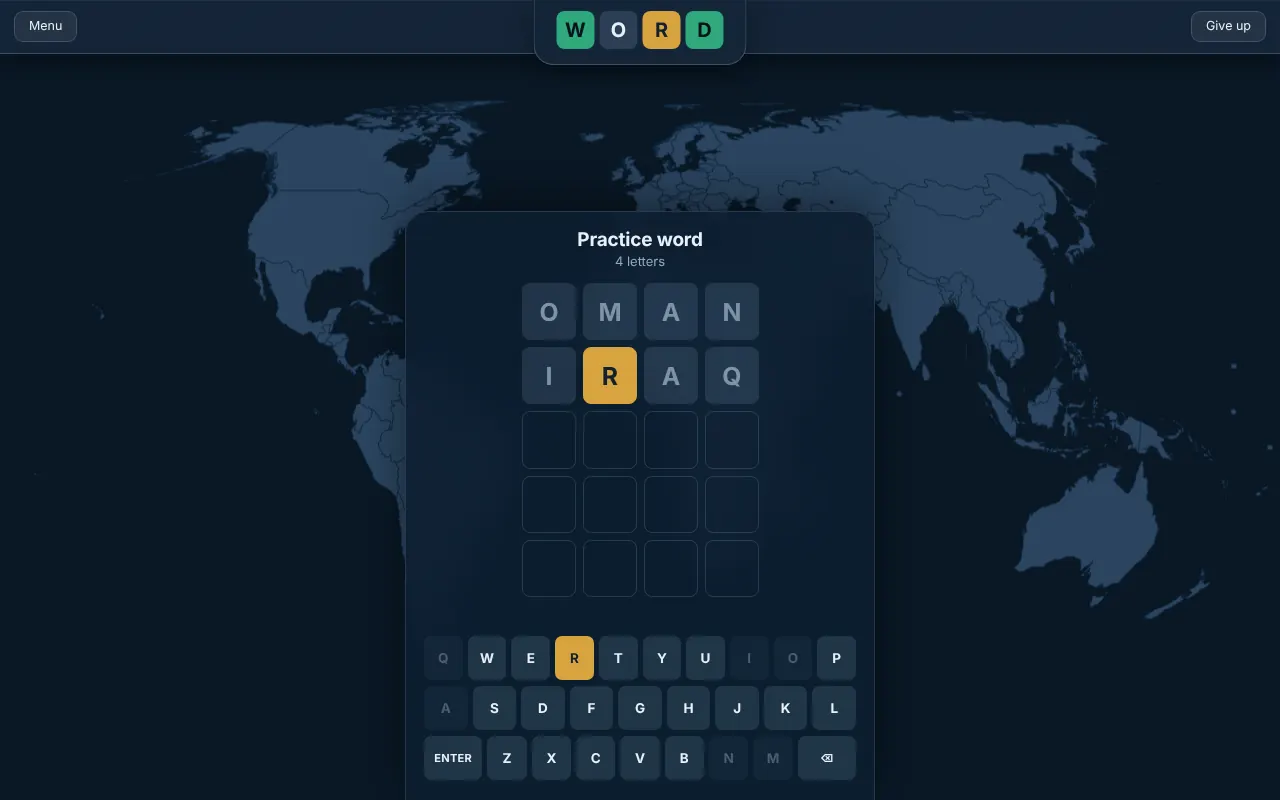 GameWord Grid: how to playRules, scoring and tips.
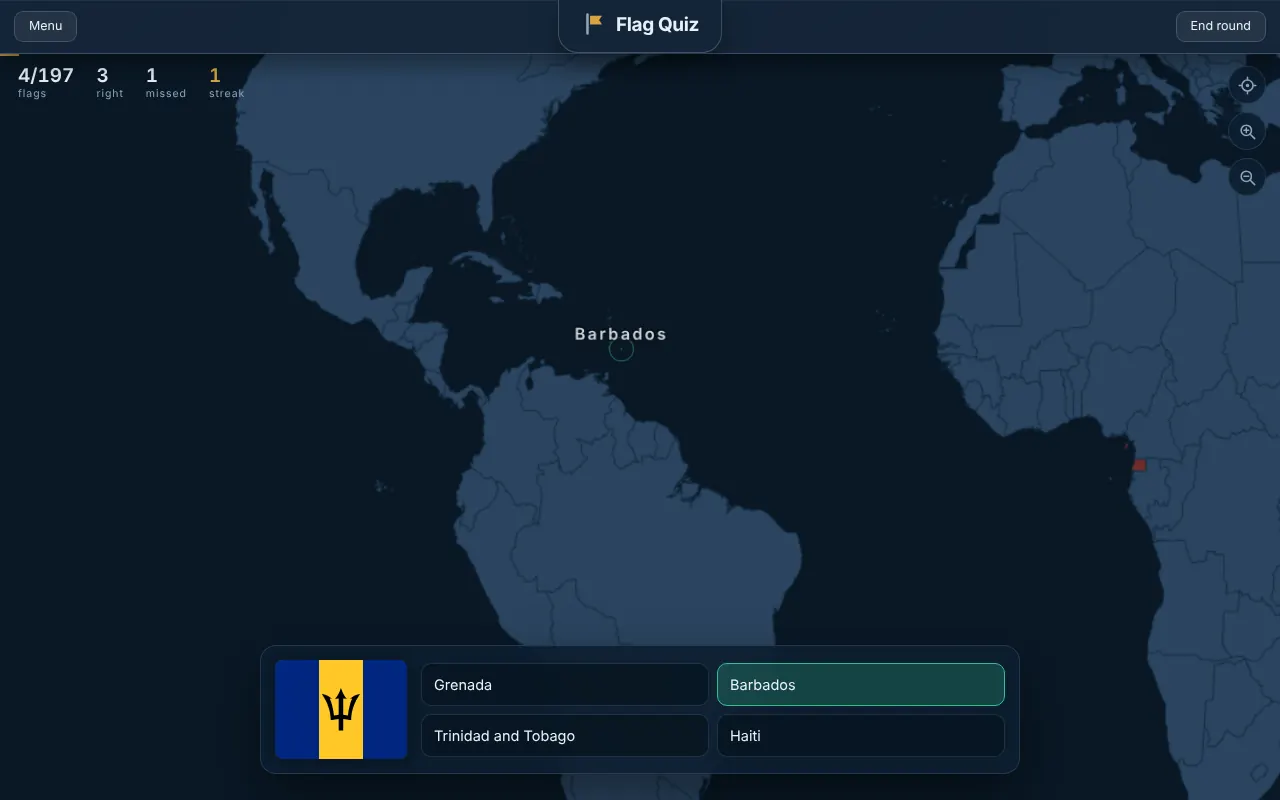 GameFlag Quiz: how to playRules, scoring and tips.
More guides
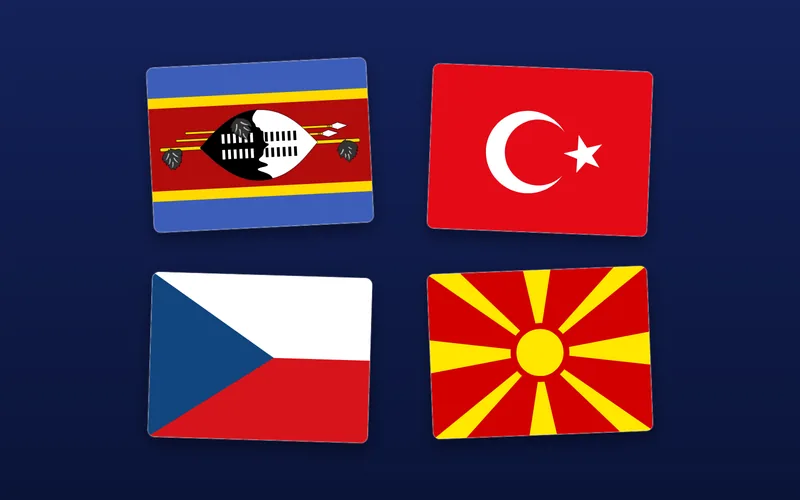 Countries · 5 min readCountries that changed their names, and what Globely acceptsEswatini, Czechia, Türkiye: recent name changes, and the older names you can still type.
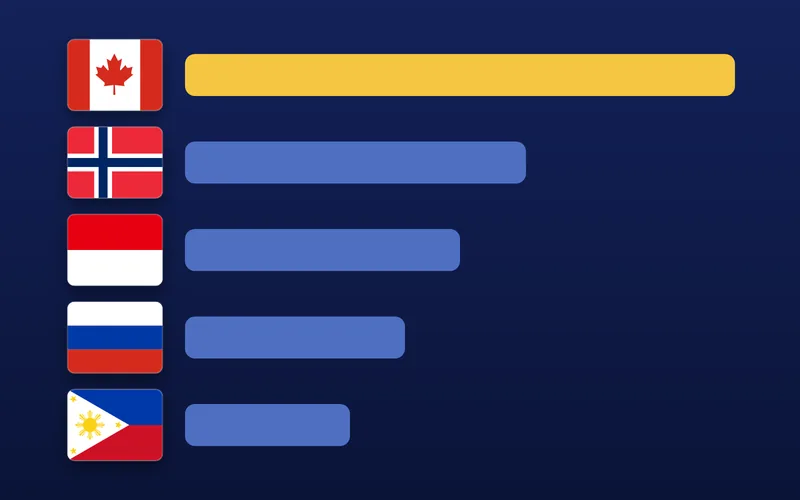 Strategy · 6 min readWho comes first in each of Rank It's 36 categoriesThe country that tops every category in Rank It, from tallest men to most volcanoes.
 How it works · 6 min readHow Globely's daily puzzles workWhy everyone gets the same puzzle on the same day, and why your friend in Tokyo gets it first.